Customer-facing tools
Calculators, estimators, planners, guided intake, quote preparation, and decision tools that help customers submit better information.
Turn repeated calculations, scattered information, and manual handoffs into a focused tool that fits the business instead of forcing the business into bloated software.
A custom tool is worth considering when the team repeats the same calculation, copies information between places, cannot see the status of work, or receives incomplete requests from customers.
The goal is not more software. It is a smaller number of clear steps, fewer avoidable errors, and information that reaches the right person in a useful form.
Calculators, estimators, planners, guided intake, quote preparation, and decision tools that help customers submit better information.
Dashboards, review queues, approvals, status tracking, reporting, and focused systems for day-to-day work.
Defined handoffs between forms, data, notifications, and existing systems, with clear failure handling and human checkpoints.
Before choosing technology, we define what enters the system, what rules apply, who uses it, and what useful result must come out.
Accounts, payments, databases, staff roles, sensitive information, and third-party systems require explicit decisions about access, storage, permissions, maintenance, and failure handling.
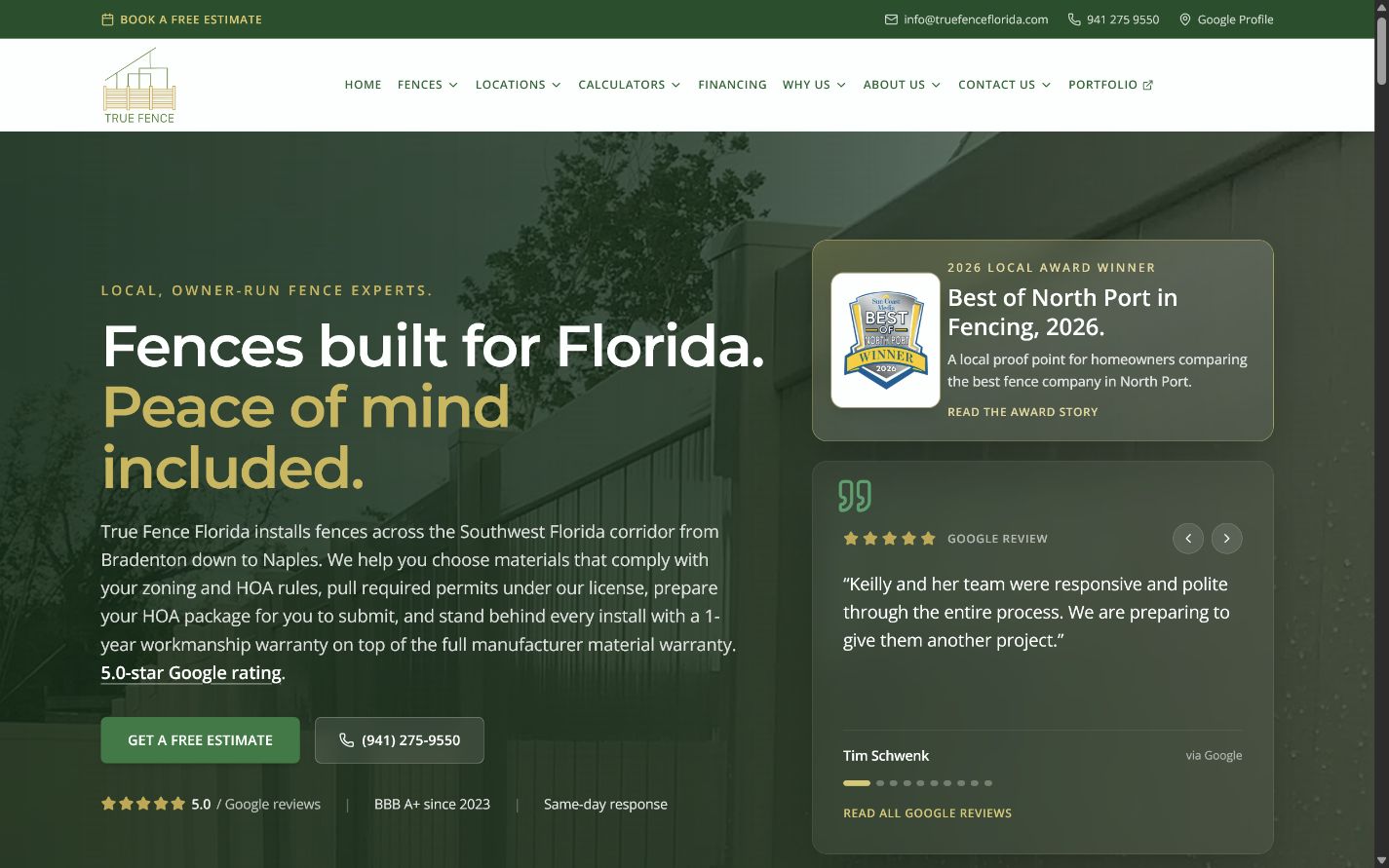
Three connected tools help visitors draw a fence layout, estimate materials, and explore budget ranges before contacting the company. The tools turn broad interest into more useful project information.
Try the customer toolsThe Website + One Custom Tool package is a public website plus one calculator, planner, estimator, or guided intake. Standalone, authenticated, or multi-system software receives a focused custom scope.
You do not need a finished brief. These answers make the boundaries clear; the project form gives me enough context to suggest the next useful step.
Examples include calculators, estimators, guided intake, customer planning tools, dashboards, review queues, approval workflows, and small automations.
Often, but the answer depends on the system, its API, permissions, data quality, and ongoing cost. Those connections are verified and written into the scope.
Usually not all at once. A focused first version can support one repeated step while leaving the rest of the workflow intact.
Yes when language or large amounts of information make fixed rules inadequate. Predictable calculations and business rules should remain ordinary software.
Describe the calculation, handoff, spreadsheet, or status problem. You do not need to know what technology should solve it.
Describe the workflow